


If you’re diving into b2b leads generation in 2026, you already know the game has changed. Remote selling is king, outreach happens across multiple channels, and AI tools are not just fancy add-ons.
They’re essentials.
Choosing the right platform like Cognism or ZoomInfo isn’t just about having lots of contacts. In fact, this Cognism vs Zoominfo comparison is becoming more important as teams rethink their 2026 prospecting strategy. It’s about data that’s fresh and accurate, compliance with strict rules like GDPR and CCPA, and automation that actually saves time.
That’s why we are here and that’s why this guide exists – to show you how these tools stack up on crucial points:
- Data quality and compliance for Europe and the US
- Pricing models that fit your budget (seat-based vs credit-based)
- AI features that help prioritize leads and speed up outreach
- How well they play with CRM and sales tools like Salesforce or HubSpot
Ready to find which sales intelligence tool fits your 2026 strategy best? Let’s dig in and explore how ZoomInfo vs Cognism stacks up across real-world prospecting needs.
What are Cognism and ZoomInfo?
You might be wondering: what exactly are Cognism and ZoomInfo, and how do they stack up in 2026 prospecting? We need to get on the same page.
What is Cognism?
Cognism is a GDPR-compliant global B2B sales intelligence platform.
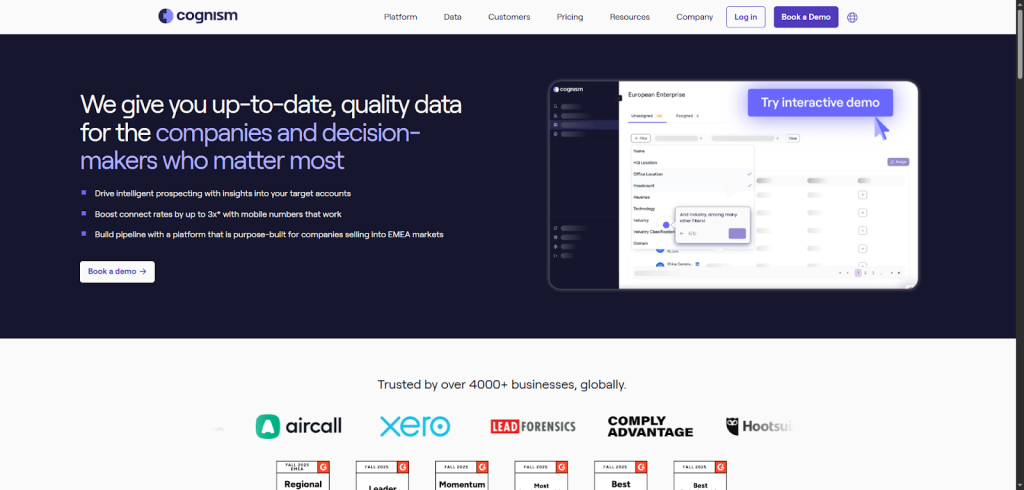
Founded in 2016, it typically serves mid-market and SMB teams, making it a great fit for those looking for reliable, GDPR-safe data with smart AI tools.
What makes it stand out? Its phone and email contacts come with Diamond Verified Phone Data. That means every number and email gets human-checked for accuracy.
Plus, Cognism uses AI-powered lead prioritization through its Sales Companion, helping you focus on the hottest leads. It also integrates Bombora intent data with Boolean filtering, so you can spot nuanced buyer intentions. If you’re working in EMEA or APAC markets, you’ll find Cognism’s user base pretty strong there.
What is ZoomInfo?
Now, ZoomInfo is a beast in the US market.
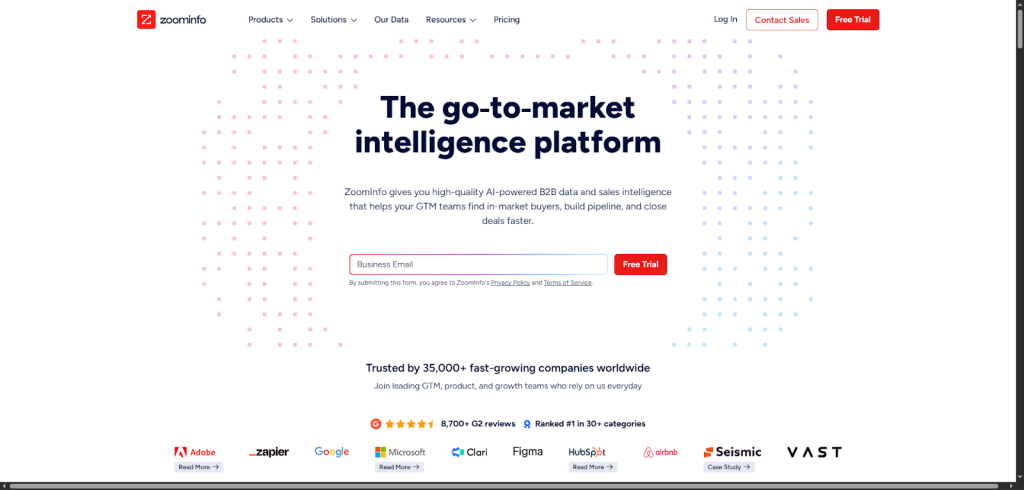
Since its public debut in 2020 after merging with DiscoverOrg, it’s been growing fast. With over 200 million contacts and 34 million companies, it’s huge. ZoomInfo’s AI assistant, Copilot, powers your workflows and recommends leads to chase.
Plus, their SalesOS suite includes built-in sales engagement and sequencing tools, so you can run high-impact campaigns without juggling platforms.
They also offer detailed buyer intent data across 5,000+ verticals, which helps you tailor your outreach. ZoomInfo mainly targets enterprise and mid-market companies, but its presence is expanding worldwide.
Sooo, here’s a quick comparative snapshot to clear things up:
- Cognism → Sales Companion AI, Diamond Verified Phone Data, Bombora-powered intent data, strong in EMEA/APAC, focused on mid-market and SMB
- ZoomInfo → Copilot AI assistant, SalesOS CRM & engagement tools, proprietary intent data, dominant in North America, mainly enterprise and mid-market
Also, just so you know, keep an eye on Generect.
It’s an emerging player focused on real-time B2B lead data with live contact discovery, integrated email validation, and a smooth API workflow. Generect’s ideal if you’re a fast-growing startup or mid-market business craving fresh data without stale lists.
Once you know what they do, the next question is simple: how do their features compare in real life?
What if there’s a third option?
Stuck on Cognism vs ZoomInfo? Generect skips the database battle with real-time verified leads.
How do their core features stack up?
When it comes to prospecting tools, you want more than just a list of names and emails and that’s why a clear Cognism vs ZoomInfo features comparison is crucial for teams choosing the right platform.
So how do ZoomInfo and Cognism stack up on these fronts?
Let’s break it down, covering their contact databases, intent data, AI and automation capabilities, compliance, integrations, and data freshness.
Contact and company database coverage
You’ll notice right away that ZoomInfo boasts a massive contact database = over 200 million contacts.
That’s huge. Like….HUGE.
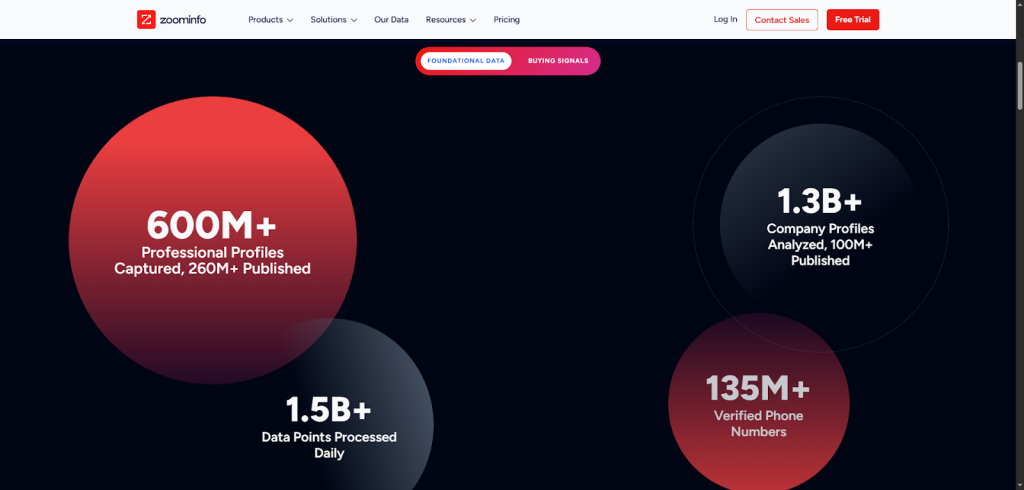
The focus here is quantity and breadth, especially strong in the US market but growing internationally. If your sales playbook needs global names with massive volume, ZoomInfo shines.
Cognism takes a somewhat different angle.
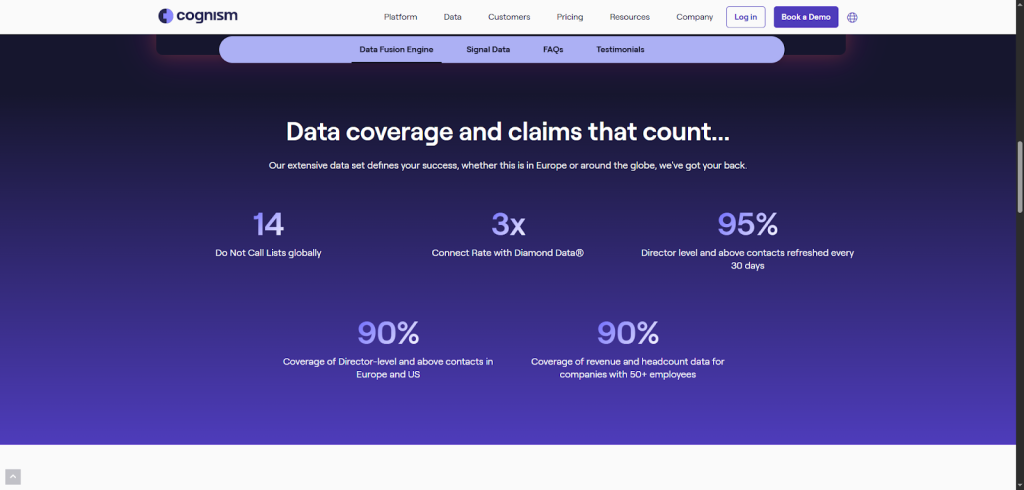
Their database isn’t as vast but is laser-focused on quality. They prioritize GDPR compliance and have this neat Diamond Verified Phone Data system, which means their phone numbers are highly accurate.
This is gold if you’re active in EMEA or APAC, where data privacy laws are strict, and mobile numbers matter a lot.
Also, I mentioned them earlier, but there’s a rising player called Generect that’s shaking things up with live, real-time data. Unlike ZoomInfo and Cognism, which store huge static databases, Generect sources leads on demand (one more time = real-time data!), validating emails continuously and keeping bounce rates low.
This means the data is fresh and actionable right when you need it, though it may not cover as many industries or have as deep historical data – another factor that often surfaces in a ZoomInfo vs Cognism B2B contact data comparison.
Intent data sources and capabilities
Knowing who’s interested before you reach out is a game-changer.
ZoomInfo leads here with proprietary intent data for 5,000+ industry verticals. They use machine learning to pull in digital signals that reveal domain-level and topical buyer intent.
So, you’re not just guessing who might respond. You get signals that tell you who’s actively researching.
And, as mentioned earlier, Cognism partners with Bombora to offer intent data too, but it’s cleverly integrated with Boolean search. And because it uses Boolean search, you don’t just get intent signals. You can shape them. In practice, that means you can:
- target buyers by specific keywords or topics
- exclude irrelevant industries or segments
- filter for company size or region
- surface niche accounts showing early interest
It’s a quick way to narrow the noise and focus on prospects who actually matter.
Plus, their Sales Companion leans on AI to prioritize leads for you, helping focus your energy where it counts.
Generect takes a more agile approach here. They scrape real-time behavior and validate it live, so you catch market shifts instantly. This immediacy helps you pounce on emerging opportunities, even if their vertical coverage isn’t as broad and their intent scoring isn’t as AI-heavy yet.
Before you choose a side…
ZoomInfo gives scale. Cognism gives accuracy. Generect gives both, live and instant.
AI and automation capabilities
Modern sales are all about working smarter, not harder. ZoomInfo offers the Copilot assistant within their SalesOS platform.
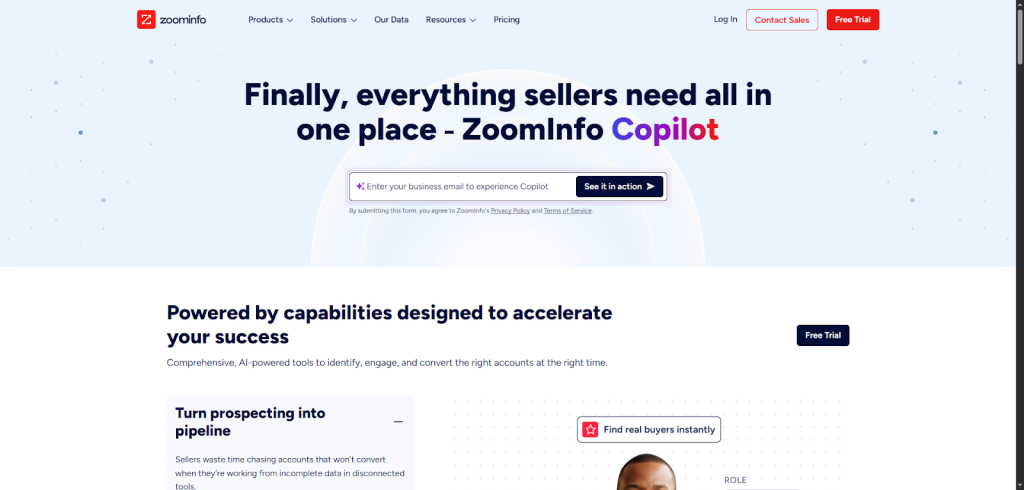
It’s a full-stack assistant that handles engagement workflows, sequences follow-ups, automates tasks, and even drafts email outreach using AI.
Imagine having a smart teammate who never sleeps and keeps your pipeline humming.
Cognism’s AI (via Sales Companion) focuses more on recommending and prioritizing leads.
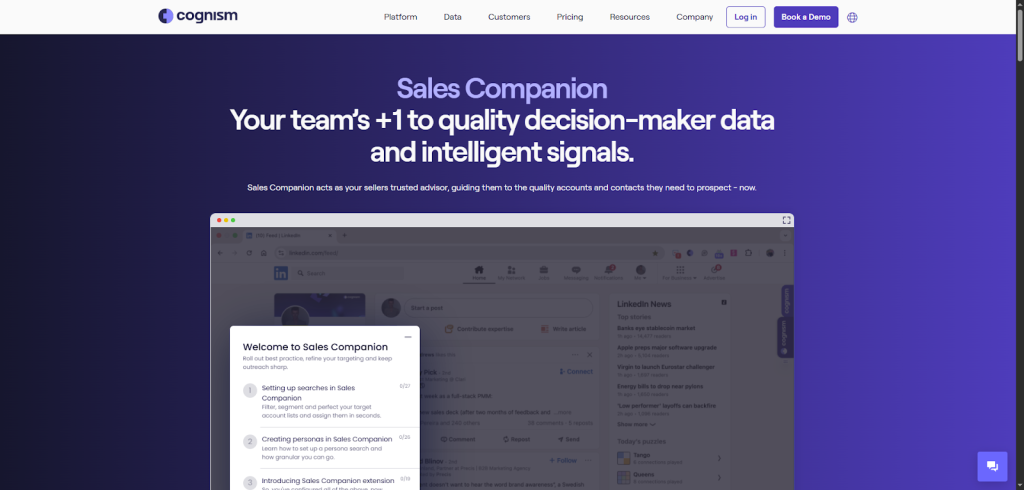
However, for actual engagement sequences and outreach automation, you’ll need to connect it to third-party platforms like Reply.io, Outreach, or Salesloft.
It’s powerful but requires a bit of extra setup.
Generect plays another role. Instead of being a one-stop-shop, it functions as a lead generation api designed to plug into your current CRM and sales tools seamlessly. In real terms, that means you can:
- pull fresh leads directly into your CRM
- trigger workflows and automations instantly
- enrich records on demand instead of in batches
- build custom funnels or dashboards in your existing tools
So you keep your stack and Generect quietly makes it faster and smarter.
This approach lets you build custom AI or workflow automations tailored exactly to your process without being locked into a big platform.
It’s a favorite for startups or agile teams who want flexibility.
Compliance features
Data privacy rules aren’t going anywhere, so compliance matters – big time.
Cognism prides itself on a GDPR-first mindset. They verify adherence to 14 European Do Not Call lists and provide automated suppression tools with ongoing data re-validation. This means you stay compliant without losing time tweaking settings manually.
ZoomInfo also covers compliance with both GDPR and CCPA. They provide tools to help manage your compliance efforts, but compared to Cognism, they rely more on you to enforce local DNC rules, especially in Europe.
Generect brings compliance into the real-time data collection process. Their system respects user consent dynamically and uses a built-in email finder tool to reduce bounces and avoid privacy violations automatically.
CRM and tech integrations
You don’t want prospecting tools that work in isolation, so both ZoomInfo and Cognism integrate smoothly with top CRMs like Salesforce, HubSpot, and Microsoft Dynamics, plus sales engagement platforms like Outreach and Salesloft.
They also work with marketing automation and Zapier, so you can automate workflows easily.
Choosing between them? Cognism offers faster, simpler setup with less administrative hassle. ZoomInfo uses a comprehensive in-house App Marketplace. This can make integration more complex but allows deeper native feature connections across your sales and marketing stack.
Generect, again, takes a lean, flexible API-driven route. Minimal IT involvement means you can connect lead search, enrichment, and validation directly into your tools without heavy platform lock-in – a real time-saver if you’re moving fast.
The feature they’re missing
If Cognism vs ZoomInfo feels close, real-time data makes the difference.
Data verification and freshness methods
Quality beats quantity, but a mix of both is ideal. Cognism combines human verification every 18 months with a 16-step phone and email check. The payoff? Over 93% deliverability and higher phone connect rates. If you rely on calling, this matters.
ZoomInfo refreshes data with constant machine learning, community updates, and confidence scoring. It works well but can occasionally carry stale data that needs manual cleanup.
Generect’s standout here is its real-time refresh on every search. They mix public data scraping with smart email validation, hitting roughly a 70% find rate and less than 2% bounce. So you get ultra-fresh, actionable contacts without the outdated info dragging you down.
To sum it up, here’s a quick side-by-side in case you want to glance it over:
| Category | ZoomInfo | Cognism | Generect |
| Data scale & reach | Very large, US-focused database | Smaller but highly verified; strong in EMEA/APAC | Real-time, on-demand global data sourcing = not limited by static databases |
| Data freshness | ML-based periodic refresh cycles | Human-verified with good accuracy | Ultra-fresh, dynamically sourced data with extremely low bounce rates |
| Intent data | Proprietary ML-driven intent signals | Bombora integration + AI prioritization | Agile real-time intent signals that update continuously, capturing in-the-moment buyer behavior |
| AI & automation | Built-in AI assistant for outreach | AI prioritization for leads | API-first automation enabling custom workflows, enrichment, scoring, and instant integration into any stack |
| Compliance & privacy | Standard compliance practices | Strong GDPR focus | Consent-respecting compliance by design = built for modern global privacy requirements |
| Integrations | Extensive App Marketplace | Fast, simple setup with major tools | Developer-friendly APIs for infinite integration possibilities, not limited to prebuilt connectors |
| Data accuracy | Broad but variable accuracy | High phone accuracy via human verification | Precision data pulled fresh at request time, reducing stale records and boosting deliverability |
| Geographic strength | Primarily US | EMEA/APAC | Adaptive = sources data per request, matching any target region in real time |
By evaluating these facets, you’ll know exactly what tools fit your prospecting style and audience in 2026. Whether you want volume, precision, or real-time agility, knowing the pros and cons here helps you win more deals with less hassle.
Features are one thing, but reach is another. Now let’s look at where each platform performs best around the world.
Done comparing features?
Generect delivers live data. No stale databases, no cleanup.
Where do they excel regionally?
When you’re comparing Cognism vs ZoomInfo, one big factor to consider is where each tool really shines on the map.
ZoomInfo’s strength is crystal clear in North America, especially across the US. It dominates here with an enormous database full of contacts, which is a godsend if you’ve got a large sales or marketing team relying on high data volumes to power workflow automation.
Plus, ZoomInfo is tightly aligned with US-specific compliance rules like TCPA and CCPA. That means you’re not just getting tons of leads. You’re getting leads that won’t get you in legal hot water.
Over in EMEA and APAC, however, Cognism takes the lead. It’s designed with European data laws like GDPR front and center, focusing heavily on verified phone numbers and local do-not-call lists.
This focus directly impacts your outreach success: users often report phone connect rates up to 22%, which beats ZoomInfo’s typical 14% in these regions. If you’re targeting Europe or Asia-Pacific, this difference isn’t trivial; it changes how quickly you can start real conversations and close deals.
Here’s a quick look at why these regional strengths matter in practice:
- ZoomInfo (North America) → extensive contact volume + US compliance (TCPA, CCPA) = scalable outreach and automation.
- Cognism (EMEA/APAC) → verified, GDPR-compliant phone data + local DNC suppression = higher connect rates and safer outreach.
It’s also worth mentioning Generect, which takes a different angle altogether.
Instead of locking into one region, Generect pulls data globally from public web sources and social channels. In practice, that helps you:
- target prospects across EMEA, APAC, and beyond with the same workflow
- avoid gaps caused by regional data limitations
- access fresher signals from multiple markets in real time
- scale outreach without juggling different rules or lists
So if your team thinks globally, Generect keeps your data global too, without the extra hassle.
And since Generect relies on publicly available info, it offers a compliance-conscious, simplified path to global data access, filling a niche that neither ZoomInfo nor Cognism fully cover.
After geography comes budget. Since pricing can shape your entire buying decision, let’s see how each platform charges and what you actually get for your money.
Go global without limits
Skip coverage gaps. Generect sources fresh contacts worldwide.
How do their pricing models compare?
You’re about to dive into prospecting, and pricing is probably top of mind, especially if you’ve already begun looking into ZoomInfo vs Cognism pricing differences.
Cognism pricing
First up, Cognism keeps things refreshingly simple. Their pricing is transparent and seat-based, with just two main tiers: *Grow* and *Elevate*.
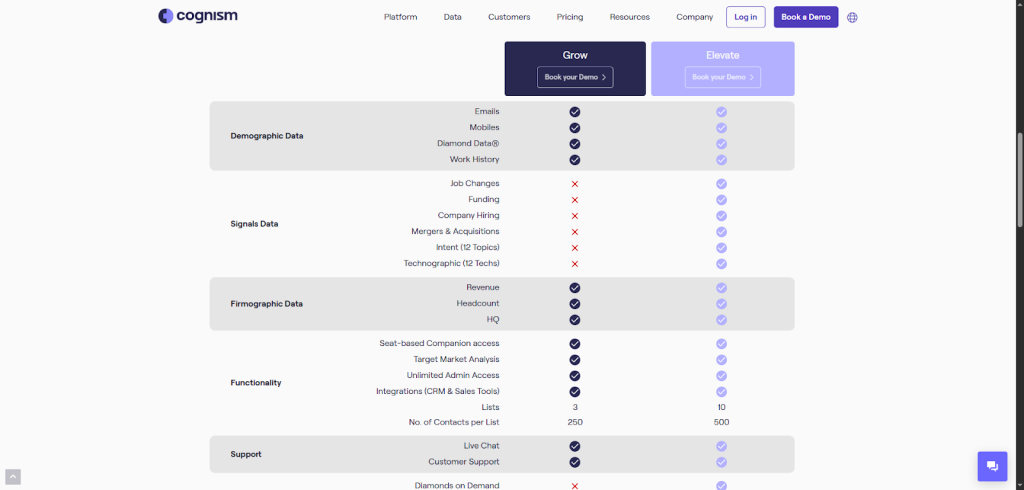
Think of Grow as your starter pack covering basic prospecting needs, while Elevate steps it up with advanced AI-driven intent data and their handy Sales Companion tool.
For a ballpark figure, ten seats land around €20,000 a year. What’s cool here is that you don’t have to sweat data export or reveal limits. This means your monthly spend is predictable, with fewer surprises sneaking up in your budget.
If you’re running a growing prospecting team or a small to mid-sized business, Cognism’s model feels straightforward and easy to manage.
ZoomInfo pricing
ZoomInfo’s pricing, on the other hand, demands a bit more attention.
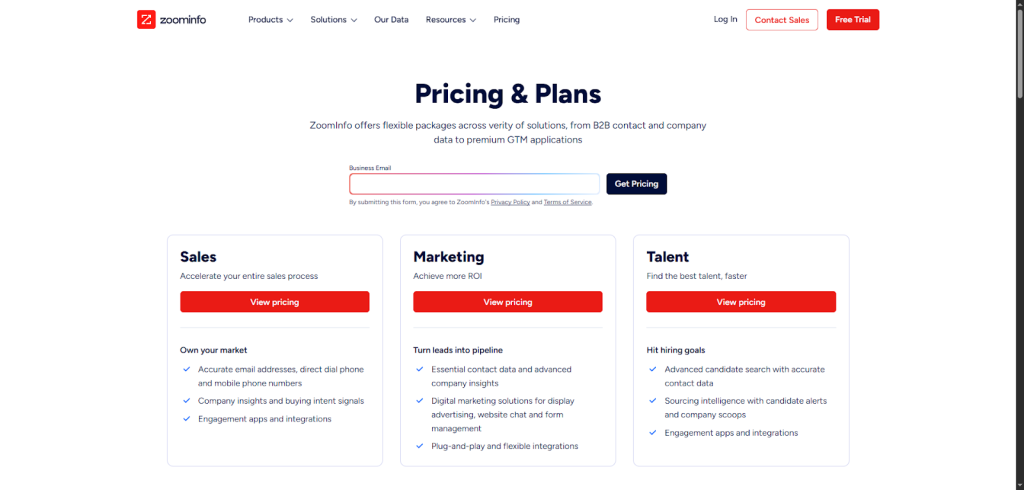
They run on a credit-based system where each action (exporting contacts, revealing emails, viewing details) burns credits.
This means costs can fluctuate quite a bit depending on how aggressively you use the platform. Plus, the minimum annual spend is roughly $15,000, which feels hefty for some. Want advanced workflow tools, ZoomInfo Copilot AI, or access to their full SalesOS suite?
Those come as paid add-ons.
This layered, complex structure can lead to unexpected credit consumption, making it tricky to forecast ROI accurately unless you’re vigilant about usage. Bigger enterprises or teams with dedicated admins who track credit burn closely tend to get the most value here.
Generect pricing
Now, if you prefer something lean and flexible, Generect introduces a fresh take: a pay-as-you-go model.
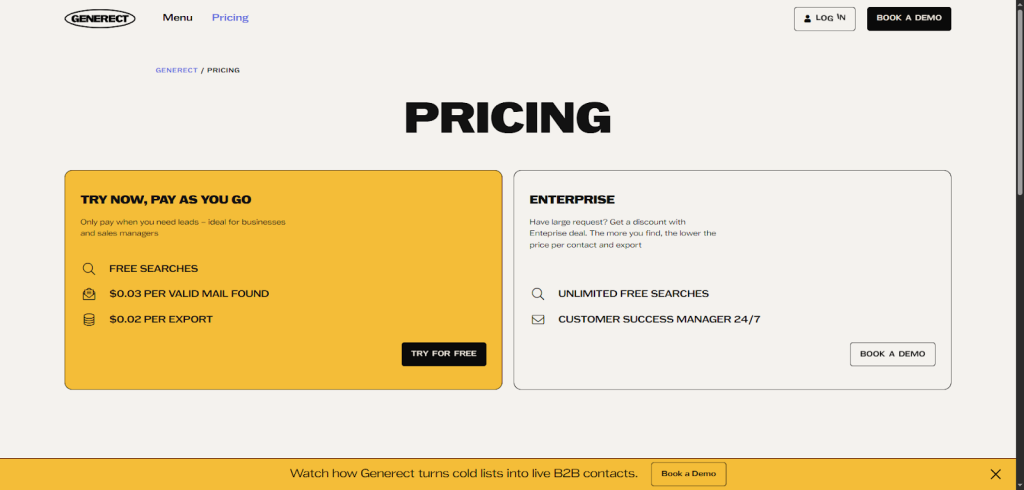
You get free searches, and pay only when you hit a valid email ($0.03) or decide to export a contact ($0.02).
This system suits smaller teams or fast-scaling startups who want to control spending tightly without the headache of subscriptions or credit packs.
Plus, Generect offers a free $5 onboarding grant and demos, perfect for testing an automated lead generation system without upfront heavy commitments.
Here’s a quick overview to keep it practical:
- Cognism → Transparent, flat-rate seat pricing; no data limits; best for SMBs wanting predictable costs.
- ZoomInfo → Credit-based, variable spend; additional paid features; suits larger teams with complex needs.
- Generect → Pay-per-use; no subscriptions; great for budget-conscious startups or agencies.
Don’t forget: all three suggest demos or trial setups to tailor pricing based on your team size and expected usage. This step helps avoid sticker shock and sets realistic expectations.
How pricing impacts scaling?
- With Cognism, adding seats means a clear increase in cost, but the flat approach lets you plan confidently as you grow.
- ZoomInfo’s credit system can make scaling a strategic puzzle, You’ll need to optimize credit use to avoid unexpected cost hikes as your prospecting volume grows.
- Generect offers flexibility to scale incrementally, so you only pay for what you use, which can be a lifesaver for lean teams testing new markets or campaigns.
By understanding these models, you’ll feel confident picking the tool that fits your 2026 prospecting hustle best, particularly when weighing ZoomInfo vs Cognism pricing as part of your decision.
Of course, it’s not just what you buy. It’s how easy it is to use every day. So let’s shift into usability and look at how smoothly each tool fits into your workflow.
Zero friction. Zero limits.
Instant activation. Simple workflow. Unlimited usage.
How usability and integrations differ in Cognism vs ZoomInfo
When it comes to usability, Cognism really shines with its clean, straightforward interface.
It’s built for sales reps and managers who want to dive right in without wrestling through complicated menus. The Chrome extension is a lifesaver, letting you enrich LinkedIn profiles and CRM data in real time.
Plus, Cognism doesn’t hit you with export limits or credit drains, so you can quickly grab the data you need without worrying about penalties. This ease of use means your team gets onboarded faster, and your daily workflow stays smooth. No unnecessary interruptions or roadblocks.
ZoomInfo packs more features, making it a powerhouse GTM intelligence platform. Its SalesOS includes advanced native engagement tools built right in, which can boost productivity if you’ve got time to learn the ropes.
However, that breadth of features comes with a steeper learning curve. The UI can feel overwhelming, especially for newbies. Their Chrome extension does support LinkedIn and web data enrichment too, but to really use it well, you’ll need some training.
These usability differences directly impact your sales team’s operational efficiency. A quick onboarding and hassle-free daily use mean less time lost and more time selling.
For example, ZoomInfo’s export limits and credit system can become a bottleneck in fast-paced sales cycles, while Cognism’s unlimited export approach lets you move at your own speed.
On a similar note, Generect is worth mentioning here for fast-growing teams.
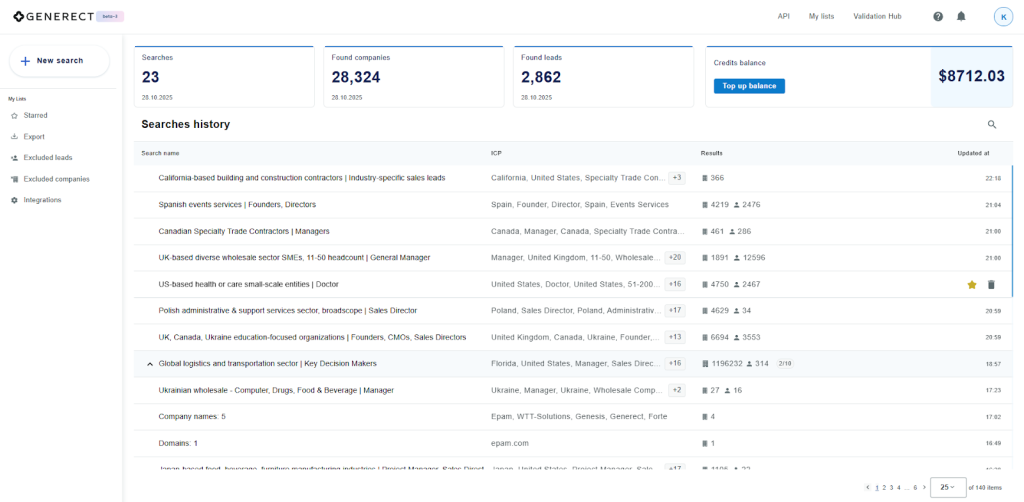
Designed with founders in mind, it features a simple dashboard and offers a Chrome extension plus an API-driven approach. You benefit from near-instant searches with no export limits or credit confusion – billing is just a transparent per-use basis.
Generect pairs seamlessly with most CRM and sales engagement tools, so you’re up and running fast. In real-world use, that lets you:
- sync new leads into your CRM automatically
- update records without manual uploads or CSVs
- trigger sequences and outreach the moment data arrives
- scale workflows without waiting on IT or custom setups
It’s plug-in, power-up, and start selling.
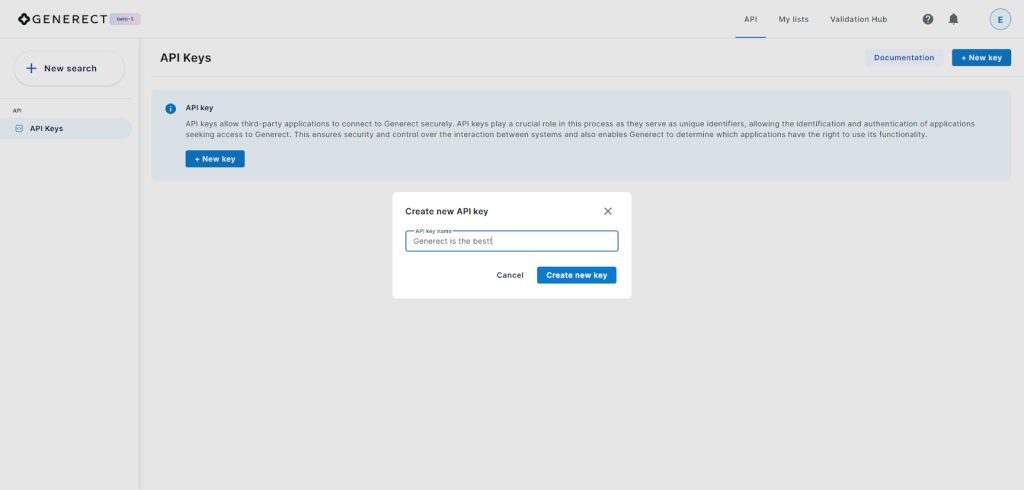
Many teams find this flexibility keeps their pipeline flowing without friction, especially when juggling multiple tools. You can explore more about how such integrations work in Generect’s handy resources.
Here’s a quick look at how these tools differ in usability and integration:
| Category | ZoomInfo | Cognism | Generect |
| Ease of use | Feature-rich but complex; steeper learning curve | Clean interface; straightforward to use | Founder-friendly, minimalist dashboard designed for speed and clarity |
| Onboarding speed | Requires training and setup time | Fast onboarding | Instant activation = usable within minutes, no training required |
| Workflow experience | Multiple modules and tools can feel heavy | Smooth enrichment workflows | Instant search and enrichment built for fast, iterative GTM workflows |
| Export & usage limits | Often credit-based and restrictive | No export or credit limits | Unlimited exports and usage = scale without penalty |
| Integrations | Broad marketplace, but setup can be complex | Simple integrations with major tools | Smooth CRM integrations + API-first design for custom pipelines and automations |
| API & developer access | Available but not core to experience | Limited technical customization | API-first architecture = ideal for builders, product-led teams, and automation-heavy stacks |
| Billing & admin | Tiered, complex pricing | Standard SaaS model | Simple, transparent billing = easy for startups and scaling teams |
| Learning curve | High = requires training and onboarding | Low = intuitive experience | Ultra-low = designed so anyone can get value instantly |
Choosing between them depends on your team’s size, tech comfort level, and how much time you want to spend setting up versus selling.
Even if these two are big names, they’re not your only options. Before choosing a side, let’s check out a few strong alternatives.
Don’t pick yesterday’s model
Real-time beats outdated lists every time.
Are there alternatives worth considering?
When you’re knee-deep in the Cognism vs ZoomInfo comparison, it’s easy to forget there are other prospector-friendly tools out there – some might even fit your needs better. So before you lock in a decision, it’s worth scanning a few solid alternatives. These tools are often used for fast prospecting and specific use cases, including:
- Apollo.io for outreach plus data in one platform
- UpLead for verified email accuracy
- RocketReach for quick individual contact lookups
- Lusha for SMB-friendly prospecting
- Seamless.ai for high-volume lead generation
They’re not one-size-fits-all, but each can fill a useful gap depending on your workflow.
Each has its strengths depending on what matters to you most, no matter if it’s pricing, data coverage, or automation capabilities. Some lean heavily into affordable plans, others focus on richer global databases or CRM integrations.
If you want to size up what fits your workflow, here’s a simple way to think about it:
| Category | ZoomInfo | Cognism | Apollo.io | UpLead | RocketReach | Lusha | Seamless.ai | Generect |
| Data model | Large static database | Verified, GDPR-focused database | Large database + engagement tools | Curated database | Aggregated contact lookup | Crowdsourced/static data | AI-driven data pulls from broad sources | Real-time, on-demand data sourcing (not static) |
| Data freshness | ML-based periodic refresh | Human-verified | Regular enrichment | Monthly refresh | Varies widely | Can be outdated | Claims AI-based updates | Ultra-fresh, sourced at the moment of request |
| Intent signals | Proprietary ML intent | Bombora + prioritization | Lead scoring & sequences | Limited | None | None | AI prospecting claims | Real-time behavioral intent signals |
| Global coverage | US-centric | Strong in EMEA/APAC | Broad global | Strong US | Broad but inconsistent | US-heavy | Broad but unverified | Adaptive = sources per region in real time |
| Accuracy / bounce rates | Mixed at scale | High phone accuracy | Good but variable | High email accuracy claims | Often inconsistent | Mixed accuracy | Quality varies | Extremely low bounce due to fresh sourcing |
| AI & automation | AI outreach assistant | AI prioritization | Sequences + automation | Minimal AI | None | Limited | AI prospecting | API-first automation + customizable AI workflows |
| Integrations | Extensive but complex | Fast, simple | Strong CRM + sales tools | Standard CRM | Basic exports | Integrations growing | Broad CRM integrations | Smooth CRM + limitless custom integrations via API |
| Ease of use | Steep learning curve | User-friendly | Feature-rich but busy | Simple UI | Very simple lookup | Easy, lightweight | Busy, sales-heavy UI | Founder-friendly, fast, zero-friction |
| Onboarding time | Requires training | Fast | Moderate | Fast | Instant | Instant | Moderate | Instant = usable in minutes |
| Export / usage limits | Credit-based limits | Unlimited | Credit-based tiers | Credit-based | Pay-per-lookup feel | Credit-based | Credit-based | Unlimited exports & usage |
| Pricing model | Tiered, complex | Premium | Freemium + paid | Mid-market | Pay-per-result | Credit-based plans | Credit-based | Simple, transparent, scale-friendly |
| Best for | Enterprise sales teams | Compliance-heavy outbound teams | Sales engagement + data | SMB outbound | Individual lookups | SMB prospecting | Volume-based SDR teams | Teams needing speed, real-time data & automation |
Beyond these, there’s an exciting player gaining traction: Generect. This one’s worth your attention if you want something fresh and cutting-edge.
Unlike traditional platforms that trap you in credit systems or seat subscriptions, Generect works on a pay-as-you-go model and boasts an API-first architecture. It’s perfect for scale-ups or teams tired of legacy platforms’ rigid pricing.
Generect focuses on live lead generation and validation, delivering real-time accuracy that can seriously boost your prospecting effectiveness.
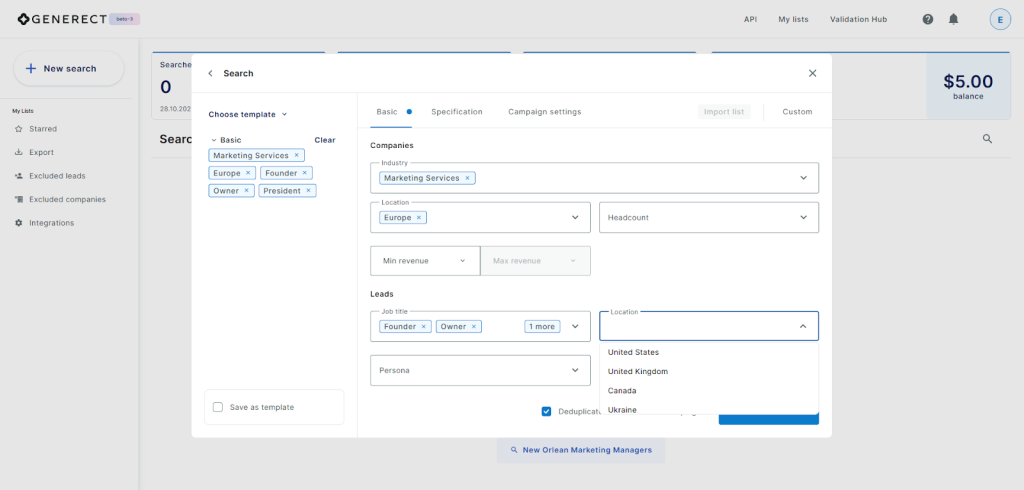
You’ll find their demo handy to see how well it matches up on data transparency and developer-friendly integrations.
If you want to dig deeper, many sales pros recommend trying out Generect’s demo to get a feel for the platform’s speed and transparency compared to ZoomInfo or Cognism.
Still, in the end, choosing a prospecting tool comes down to what fits your unique setup. Don’t just look at the Cognism vs ZoomInfo pricing or features in isolation. Think about your budget, team size, compliance needs, and how much automation you want.
Marketing claims only go so far. To get a real pulse, let’s look at what actual users report from the trenches.
The real alternative
Forget static databases! Generect delivers live, verified leads.
What do customers say?
When it comes to ZoomInfo vs Cognism features, hearing from actual users gives you a clear picture of what’s working, and what stands out. Both tools boast impressive capabilities, but real-world feedback sheds light on how they perform day-to-day.
Many Cognism users praise its sharp focus on compliance, especially in EMEA markets. One marketer shared, “Cognism’s GDPR compliance gave us peace of mind in EMEA campaigns,” highlighting how it makes managing data privacy less stressful. Customers also report cleaner, more accurate data improving their connect rates and reducing bounce rates.
That translates to faster ROI and better-quality engagement.
On the ZoomInfo side, users rave about its AI-driven features. Sales reps say, “ZoomInfo’s Copilot AI accelerated our email outreach by automating sequences.” This hands-off approach helps teams reach prospects more efficiently, boosting response rates without the manual grind.
People also note ZoomInfo’s continuous product updates keep it ahead of changing sales needs.
Support and onboarding reveal a few notable differences:
- Cognism → customers often mention a smooth onboarding process and responsive support. They appreciate the clear, welcoming training resources that help teams get up to speed quickly.
- ZoomInfo → while some find its onboarding slightly complex, they value ongoing updates and a robust help center that evolves alongside the product.
Beyond these two, Generect is gaining traction as an exciting player.
Users report it pushes the bar in email discovery with success rates up to 73% and bounce rates dropping to about 2%. Sales development reps love its real-time data freshness and easy API integration that cuts out tedious data cleanup. One lead gen head said, “Generect’s simplicity and accuracy accelerated our outreach and boosted conversions.”
Driven by founder-led innovation, Generect promises a future with 60% reply rates and less spam, thanks to its commitment to high-quality live data. This focus on practical gains resonates strongly with users looking to streamline lead research and personalize their approach.
Whether you’re looking at Cognism vs ZoomInfo features comparison or curious about fresh solutions like Generect, customers overwhelmingly agree: good data, smooth compliance, and smart automation make all the difference in 2026 prospecting.
With all that in mind, it’s time for the final question. Which platform gives you the best edge in 2026 prospecting?
Which tool wins in 2026 prospecting?
Choosing between Cognism and ZoomInfo comes down to your specific needs and ultimately wraps up the core Cognism vs Zoominfo debate for 2026:
- Cognism shines with its standout accuracy, EMEA market expertise, and strict compliance with 14 European DNC lists. If you’re focused on Europe, it’s a top pick.
- ZoomInfo, meanwhile, rules the US market with unmatched data scale and powers prospecting with smart workflow tools like Copilot and SalesOS.
You’ll also want to consider alternatives, especially for startups and SMBs craving fast, fresh leads without long contracts, Generect’s real-time lead search and pay-as-you-go pricing could be a game-changer. Their flexible API fits nicely into many tech stacks, making integration easy.
So, if you’re still weighing your options, that’s normal. The best way to know what works is to see it in action.
If you’re curious about how real-time data and instant lead sourcing could speed up your prospecting, you can book a quick Generect demo and explore it hands-on. No commitments, no pressure. Just a chance to see whether it fits your workflow.
It might help you make a clearer, faster decision.

