


Last updated: September 28, 2026. Real-time buying signals are observable actions or company events that suggest a prospect may be moving toward a purchase. The useful question is not “Did they click?” but “Is this signal recent, strong, relevant, and supported by other evidence?”
TL;DR: Combine fit data with at least two recent intent signals, score the evidence, verify the decision-maker and contact details, then respond with context within one business day. A single email open or page view is not enough.
This 2026 guide explains which B2B buying signals matter, where to find them, how to score them, which tools cover each job, and what sales should do next. You will also get a practical signal-to-action matrix and a transparent distinction between intent platforms and contact-data tools.
What are real-time buying signals?
Real-time buying signals are recent, observable actions or company events that increase the probability that an account is entering a buying cycle. Examples include a demo request, repeated visits to high-intent pages, a relevant executive hire, active evaluation of alternatives or a surge in research around your category.
“Real-time” does not mean every event deserves an instant sales message. It means the signal reaches your workflow quickly enough to be scored while it is still useful. Strong prioritization combines fit + strength + recency + independent confirmation.

The 8 B2B buying signals to prioritize in 2026
| Signal | Strength | Useful response window | Best next action |
|---|---|---|---|
| Demo, trial, pricing or security request | Very high | Minutes to hours | Route to a named owner with the request context |
| Positive reply or meeting request | Very high | Same business day | Continue the conversation; stop automated sequences |
| Repeated pricing, comparison or implementation-page visits | High when identity is reliable | 24–72 hours | Confirm the account and offer decision-stage material |
| Multiple people from one account researching | High | Several days | Map the buying group and tailor outreach by role |
| Relevant executive hire | Medium-high | First 30–90 days | Research stated priorities before contacting the new leader |
| Funding, expansion or hiring in the target function | Medium | Days to weeks | Connect the event to a specific operational need |
| Competitor evaluation or category-research surge | Medium-high at account level | Days | Verify coverage and corroborate with another source |
| One email open, page view, like or follow | Low | Do not rush | Wait for another signal; bots and privacy features create noise |
Signal-based outbound: the minimum viable workflow
- Define the event. Name the exact behavior or company change and the source that produces it.
- Set a decay window. A product request may matter for hours; a leadership change can remain relevant for weeks. Expired signals should stop adding priority.
- Confirm ICP fit. Check segment, geography, company size, role, and whether your offer can solve the likely problem.
- Require corroboration for inferred intent. Combine two independent signals before escalating an account that did not explicitly raise its hand.
- Resolve the buying role. Find the champion, evaluator or decision-maker; verify the contact channel before outreach.
- Route with a reason. The CRM task should show the signal, timestamp, score, owner, and recommended next action.
- Use privacy-safe context. Refer to public business events or the buyer’s explicit request. Do not reveal surveillance-like behavioral detail.
- Measure outcomes. Compare accepted-lead, reply, meeting, and pipeline rates by signal, not just the number of alerts generated.
This matches what current 2026 competitor pages emphasize: specific signal lists, action windows, multi-source intent, and signal-based outbound execution. The differentiation here is the scoring model, decay policy, privacy rule, and a clear handoff from intent detection to verified contact data.
Why should you care about buying signals?
Let’s say you’ve got a list of 500 leads. You could email all of them.
Cross your fingers.
Hope for replies.
Or…you could focus on the 12 who just checked out your pricing page, opened your last email, and downloaded your case study this morning.
That’s the difference buying signals make.
They help you stop guessing and start prioritizing the people who are actually showing interest, right now.
Some leads are just curious, so = ready to buy (they definitely aren’t the same). Others are actively looking for a solution.
Buying intent signals help you tell the difference.
When someone takes action (like visiting your product page, signing up for a free trial or attending a webinar), they’re giving you a heads-up.
They’re saying, “I’m interested. Maybe not sold yet, but I’m interested.”
You can use that momentum.
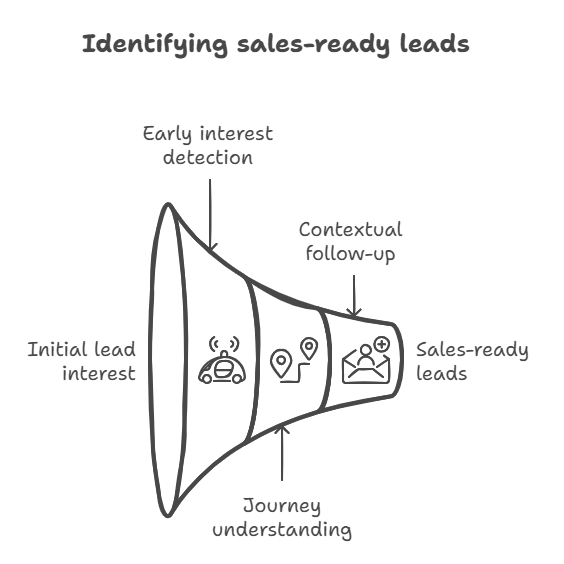
Here’s how buying signals help you identify sales-ready leads:
- You spot interest early, before competitors do.
- You know where they are in the journey and what they care about.
- You follow up with context, so your message feels personal, not pushy.
When it comes to sales outreach, not all leads are the same, and how you approach them shouldn’t be either. Here are 2 common types you’ll come across and how to approach each one:
- Cold lead: You got their email from a list. They haven’t heard of you. They haven’t clicked anything. You’re starting from zero.
- Intent-based lead: They’ve visited your site. Maybe opened a few emails. Watched a demo. They know who you are, and they’ve shown some interest.
It’s like the difference between knocking on a stranger’s door and chatting with someone who’s already inside the store, looking at the product you sell.
Who’s more likely to say “yes”? The one already showing intent.
Better signals = better outreach (and more deals)
When you rely on buying signals, your outreach isn’t just faster; it’s smarter.
Instead of, “Hey, just checking in…” you say: “Hey, I saw you downloaded our guide on reducing churn. Want to see how we helped [Company] cut theirs by 30%?”
Now you’re relevant.
You’re adding value.
And you’re increasing your chances of getting a reply.
Here’s what changes when you build your strategy around buying signals:
- Higher response rates
- Fewer wasted follow-ups
- Shorter sales cycles
- More closed deals
You’ll spend less time chasing and more time closing. Sounds great, right?
Next up, we’ll look at the types of signals and how to spot them in the wild.
What types of buying intent signals should you look for?
One more time: not all buying signals are created equal.
Some tell you a lead’s interest.
Others show they’re ready to act.
The trick is knowing what to watch, and what each signal means. You don’t need to track everything. Just focus on the right signals, in the right places.
That’s why it’s important to break them down into 5 simple categories. As a result, you’ll learn how to spot them and what to do next.
Behavioral signals = what they do tells you what they want
These are the most obvious signs. They’re based on how someone interacts with your content or website.
Recognising buying signals is all about watching for:
- Visiting your pricing, demo or features page
- Downloading a whitepaper, guide or case study
- Spending a lot of time on your site or coming back repeatedly
These actions show curiosity or even active research.
All you need to do is set up alerts or lead scoring tools that notify you when someone completes multiple actions in a short time. When you follow up, mention exactly what they looked at.
Keep it relevant.
Still, some are a little more advanced, and come from changes inside the company or shifts in their tech stack. These can be even stronger signs that a lead is ready to buy. You just need to know where to look.
Firmographic signals = what’s happening at their company?
Sometimes, it’s not about what a person does. It’s about what’s happening in their company. Big business changes can be just as strong a buying signal as a click on your website.
Keep an eye out for signs like hiring sprees, especially in departments like sales, marketing or operations. That often means they’re scaling, and likely need new tools to support that growth.
New funding rounds are another strong signal. If a company just raised money, they’re usually ready to invest in solutions that help them move faster. Mergers, expansions, and product launches also open the door to change.
And change often comes with new budgets and fresh priorities.
To spot these shifts, use tools like LinkedIn, company newsletters or sales intelligence platforms. You’ll pick up on key updates before your competitors do.
Tiny hint, the best practice, if you will: when you reach out, don’t send a generic message. Make it relevant. Mention the change you noticed and connect it to how you can help.
For example: “Saw your team just launched a new product. Congrats! We work with similar companies to help streamline go-to-market efforts. Want a quick walkthrough?”
Technographic signals = what’s in their tech stack?
Some B2B buying signals come from the tools they’re using or changing. When a business adjusts its tech stack, that’s often a sign they’re open to better options.
Watch for updates like adopting a new CRM, CMS or sales platform. These moves usually mean the team is growing or modernizing their systems.
If they’re canceling or replacing software that’s similar to yours, that’s another clear signal: they’re probably hunting for something that works better. Also, if they start using tools your product integrates well with, it’s a great opportunity to show how you fit into their new setup.
These are strong clues that they’re actively evaluating, reworking or upgrading their tools. And that’s your cue.
If your product complements or competes with what they’re using, now’s the time to reach out. Position your offer as a smart upgrade, a better fit or a way to make their new stack work even smoother.
A simple message like “Saw your team just rolled out [tool]. We’ve helped similar companies make it even more powerful with [your solution]. Want to see how?” can open the door naturally.
This kind of timely outreach shows you’re in tune with what they’re working on, and makes it way more likely they’ll want to hear from you.
Engagement signals = are they interacting with your brand?
Sometimes B2B buying signals are subtle, but just as important. If someone keeps engaging with your content, they’re paying attention. And that’s your chance to step in.
Look for signs like someone opening your emails multiple times or clicking on links in your campaigns. Maybe they replied to a message or even requested a demo. These actions show they know who you are, and they’re curious.
That curiosity means they’re warming up, and you don’t want to miss that window.
So don’t wait.
Follow up while your brand is still fresh in their mind. Keep it friendly and tie your message to whatever they just did. For example: “Hey, noticed you checked out our latest guide. Happy to answer any questions or share a quick demo if it’s helpful.”
Make it easy for them to take the next step. Offer something useful, keep it light, and stay helpful. When the timing’s right, even small signals can turn into big wins.
Social signals = what are they saying (or liking) online?
Social media gives you real-time signals, and they’re all out in the open. They might be softer than a demo request, but they’re still worth paying attention to.
If someone’s liking, sharing or commenting on your posts, that’s a sign they’re interested. Maybe they’ve followed your company or even a few of your team members. Or they’re posting about topics that connect to what you offer.
All of this shows they’re in your world, and they’re listening.
When that happens, don’t ignore it. Engage back. Leave a comment, send a quick message or share something genuinely helpful. You’re not pitching yet; you’re just starting a light, human conversation.
Use these moments to build the relationship. Be real. Be helpful. And when the time’s right, you’ll already have their attention.
Know who’s ready to buy, right now
Stop guessing and start selling to leads who are actually interested, with Generect.
Now that you know how important buying signals are and what they look like, we’re ready to talk about where they show up.
Where do these signals come from?
Sales-ready signals are all around you. Some are right inside your own tools. Others are floating out there on the web. The key is knowing where to look and what to watch for.
Here’s how to start spotting them.
Start with what you already own → first-party data
It’s the data you collect directly from your own channels: your CRM, your website analytics, your email platform
These tools track how people engage with you. That’s powerful. When someone visits your pricing page, opens three emails in two days or requests a case study, those are strong buying signals in sales.
Here’s how to make it work:
Set up alerts in your CRM when a lead hits key pages. Use email automation tools to flag leads with high open and click rates. Connect your website tracking to your sales system so you can see exactly who’s active, and when.
Tap into bigger trends → third-party buying signals data
Sometimes, the signals come from outside your own world. That’s where third-party data comes in.
Third-party intent platforms aggregate research activity or account-level web behavior outside your owned channels. Coverage and methodology vary by provider, so ask which sources are observed, how identities are resolved, how frequently data refreshes, and whether the signal is person-level or account-level.
Your quick-start guide:
Platforms such as Bombora, 6sense, Demandbase, and ZoomInfo offer different forms of account intent data. Use those signals to identify a likely account, then verify the relevant people and their contact details before outreach.
Reach out while they’re still deciding.
Watch their digital footprints
People reveal a lot through social media: what they like, share, comment on or post about.
Maybe a prospect just followed your company, liked your product launch or asked for tool recommendations on LinkedIn. These small actions can mean big interest.
How to take the next step:
Set up social listening tools (or even simple keyword alerts). Pay attention to when a lead engages with your content or talks about your niche.
That’s your chance to jump in and add value, without selling too hard.
Look at public info and company updates
Not all B2B buying signals are behavioral. Some are situational.
If a company just raised funding, hired a new head of marketing or launched a new product, they might be entering a buying cycle. These shifts often trigger new needs, and new purchases.
Time to put it to work:
Track company news with Google Alerts. Check LinkedIn for job changes. Follow industry news that might affect your ideal clients. Timing your outreach around these changes makes your message feel more relevant, because it is.
Our next step? Let’s figure out which tools can be useful to you.
What tools can help you track buying signals in real time?
No tool sees every signal. Build a small stack around four jobs: capture first-party behavior, detect account events, identify the right buyer, and verify contactability. This is the clearest gap in many buying-signal guides: they name vendors without explaining which part of the workflow each one owns.
| Tool or category | Best signal or job | Use it when | Important limitation |
|---|---|---|---|
| LinkedIn Sales Navigator | Job changes, account updates, content engagement, relationship paths | You sell through people and need fresh role/context alerts | LinkedIn activity is context, not proof of purchase intent |
| Dealfront | Company identification from website visits | You have meaningful anonymous B2B traffic | Usually resolves an account, not the exact visitor |
| ZoomInfo Intent | Account-level topic research plus contact data | You want intent and prospecting data in one enterprise stack | Confirm topic coverage, refresh cadence, and contract terms |
| 6sense | Predictive account stages and buying-group prioritization | You run mature account-based marketing and sales programs | Model output still needs human validation and clean CRM data |
| Bombora | Account-level topic surges across a B2B data cooperative | You need off-site research signals across named accounts | A surge shows unusual research, not who researched or whether they will buy |
| HubSpot Buyer Intent | Website intent, target-market fit, and CRM-native routing | Your team already works in HubSpot | Keep native enrichment, Buyer Intent, and other credit-based features distinct |
| Generect | ICP search, company and decision-maker discovery, email finding and validation | A signal identifies an account and you need the right reachable person | Generect is the contact-data and verification layer, not a third-party intent-monitoring platform |
LinkedIn says Sales Navigator now supports 50+ search filters across more than one billion members and provides real-time alerts for events such as role changes and content engagement. Those are valuable timing and context signals, but they still need to be combined with fit and purchase evidence.
Where Generect fits in a buying-signal workflow
Generect does not claim to watch a prospect’s browsing behavior across the web. Its documented role starts after your analytics, CRM, social alerts or intent platform surfaces an account. Use Generect to search companies and leads by criteria such as title, seniority, industry, location, and company headcount; then find and validate a work email before outreach.
- Capture the signal: for example, repeated pricing-page visits, a funding event, a new VP hire or an account-level topic surge.
- Confirm fit: check industry, geography, size, and the problem your product solves.
- Find the buying role: search for the likely decision-maker, champion or technical evaluator.
- Validate contactability: run the email finder and validator rather than treating a guessed address as deliverable.
- Send a signal-specific message: reference the business context you can responsibly observe, not private behavior you cannot verify.
How do you score buying signals without overreacting?
Use a transparent score instead of letting one noisy event trigger an SDR. Score each account from 0 to 11, then subtract up to three risk points.
| Dimension | Score | Example |
|---|---|---|
| ICP fit | 0–3 | Industry, size, region, and use case all match |
| Signal strength | 0–3 | Demo request scores higher than one blog visit |
| Recency | 0–3 | Today scores higher than 30 days ago |
| Independent confirmation | 0–2 | Two sources agree: pricing activity plus a relevant job opening |
| Risk deduction | 0 to −3 | Student traffic, competitor research, bot activity or unresolved identity |
Routing rule: 8+ means contact within one business day; 5–7 means add to a short nurture and watch for another signal; 0–4 means monitor. Recalculate as signals decay instead of leaving an account permanently marked “hot.”
A 24-hour signal-to-action matrix
| Observed signal | Confidence | Next action | Avoid |
|---|---|---|---|
| Demo or trial request | High | Route immediately with the requested context and owner | Generic nurture before a human response |
| Pricing page + case study + return visit | High when identity is reliable | Verify the account and buyer, then send a helpful comparison or implementation note | “We saw everything you did” language |
| New executive in the relevant function | Medium | Research stated priorities and offer a role-specific benchmark | Assuming the new hire has budget |
| Funding, hiring or expansion event | Medium | Connect the event to a credible operational need | Congratulations-only pitches with no relevance |
| One email open or social like | Low | Wait for corroboration | Immediate sales escalation |
How do you use buying signals to prioritize leads?
So, your analytics, CRM, social alerts or intent platform are capturing buying signals. Great, but a signal only becomes useful when it changes your next action.
Now what?
The next step is turning those signals into action, figuring out which leads deserve your time today.
Here’s how to do it.
Step 1: Start with lead scoring = know who’s worth chasing
Not all signals are created equal. Someone liking a LinkedIn post? Nice. But not as strong as someone requesting a demo or viewing your pricing page twice in two days.
This is where lead scoring comes in. You assign points to different actions based on how much intent they show.
For example:
- +10 for downloading a whitepaper
- +25 for visiting the pricing page
- +50 for requesting a demo
- +5 for opening an email
When a lead’s score hits a certain number (say 70+), that’s your cue: they’re ready for sales.
How to set it up? Easy! Use your CRM or a tool like HubSpot, Breadcrumbs.io or Salesforce to create a simple scoring model. Adjust it over time as you see what works.
Step 2: Create smart segments and triggers
Once you’ve got scoring in place, take it a step further with smart segments and automated triggers.
Think of segments as groups like:
- “Highly engaged leads”
- “Pricing page visitors in the last 3 days”
- “Accounts showing intent but no contact yet”
Then, set up triggers to do things like:
- Alert your sales team immediately
- Move the lead to a “hot” pipeline stage
- Send a tailored follow-up email
Use your analytics, CRM, and marketing automation platform to create segments and triggers. Bring in Generect when the workflow needs current company, lead or email data before outreach.
Step 3: Real-time sales alerts → act fast while they’re warm
Speed matters. End of the story.
If a lead’s showing intent now, they could be talking to your competitor tomorrow.
That’s why real-time alerts are so valuable. They let your sales team know the moment a key lead takes action, so they can reach out while interest is high.
You can send alerts: directly into Slack, via email notifications or as tasks in your CRM
The most important thing here is to keep alerts simple and focused. For example: “Sarah at Acme Inc. just viewed your pricing page twice in 30 minutes.”
That’s your signal to jump in with a personal, timely message, not a generic pitch.
So, what should you do next? How can you craft the perfect response when those signals kick in?
What should your team do when a buying signal appears?
You’ve spotted a buying signal. Awesome. But now comes the part that really counts: what you do with it.
If your team freezes or sends the wrong message, the moment’s gone. But with the right moves, you can turn that signal into a real sales conversation.
Let’s walk through how to handle it.
Step 4: Use sales playbooks that match the signal
Not every signal means the same thing, so your response shouldn’t be one-size-fits-all.
That’s where sales playbooks come in. Think of them as mini game plans based on different actions a lead takes.
For example:
- Pricing page view? → send a quick message offering to walk them through pricing or ROI.
- Demo request? → respond immediately with a calendar link. Don’t make them wait.
- Whitepaper download? → follow up with related content or a short, helpful insight.
To build these, create 3–5 quick-response playbooks for your top buying signals. Keep them simple and repeatable. You can even automate parts of them with your CRM or outreach tools like Reply.io.
Step 5: Craft outreach that feels personal and timely
When you reach out to a lead after spotting a buying signal, your message should feel personal, like you saw them raise their hand and you’re just here to help. It’s not about pushing a sale.
It’s about being helpful at the exact right moment.
Start by mentioning what they actually did.
Maybe they visited your pricing page or spent time on your product tour.
Call that out in a natural way. Something like: “Hey! Noticed you were checking out our pricing. Want me to walk you through what might fit your team?”
Simple, specific, and friendly.
Next, make sure you’re offering value, not pressure. You’re not trying to close the deal in your first sentence. You’re opening a door. Try: “Happy to share a quick overview or answer any questions. Just let me know.”
You’re giving them a way to engage without making it feel like a sales trap.
Keep your message short. One or two sentences is more than enough. Long messages feel like work. Short ones feel like conversations.
And most importantly, talk like a human. No buzzwords, no formal tone. You’re not pitching on a stage; you’re starting a chat. Use language that’s casual, warm, and easy to respond to.
Step 6: Follow up without being pushy
Not every lead will reply right away. That’s okay. Your job is to stay present, without turning into a pest.
Here’s how to follow up like a pro:
- Wait 2–3 days, then check in with a quick nudge
- Reference the last message, but add something new (e.g., a case study or tip)
- Keep it human: “Just making sure this didn’t slip through the cracks. Happy to help if now’s the right time.”
If they’re truly interested, your timing and consistency will pay off.
Want to double down on what’s actually working? Then head to the next section where we’ll talk collaboration.
How can marketers and sales teams work together here?
Real-time buying signals are powerful, but they only work if marketing and sales are on the same page.
Too often, leads get stuck in limbo.
Marketing sees the signals. Sales doesn’t act fast enough.
Or worse: sales reaches out without context. The result? Missed chances and awkward conversations.
But when the two teams work together? That’s when the magic happens. This collaboration = closed deals.
Here’s how to make it work.
Get aligned on what a sales-ready lead looks like
First, you’ve got to agree on one thing: what does “sales-ready” actually mean?
Is it someone who visited the pricing page twice? Someone who downloaded a case study and came back for more? A certain lead score?
Sit down (virtually or in-person) and define it together. Not just in theory. Use real buying signals examples from recent wins. What did those leads do before they converted?
As a quick tip, write out a simple checklist. If a lead meets X, Y, and Z criteria, they’re ready for sales. If not, they stay with marketing for now.
Share buying signals data across teams
Once you know what to look for, make sure everyone can see the same signals in real time.
You don’t want marketers spotting intent in a dashboard while sales is left guessing.
Here’s how to keep things in sync:
- Use shared CRM views and agreed signal definitions; add verified contact data when an account is ready for outreach
- Set up alerts or automated emails when hot leads hit certain triggers
- Review signal activity in weekly sales-marketing standups
The goal is simple: no surprises. Everyone knows who’s interested and why.
Use automation to keep the flow moving
You don’t have to do everything manually. In fact, you shouldn’t.
Smart automation can help you:
- Score leads automatically as they engage
- Route qualified leads instantly to the right sales rep
- Send personalized follow-ups triggered by behavior
For example, when someone downloads a high-intent asset, marketing can set a rule that scores the lead and notifies the rep instantly, without lifting a finger.
And be sure, automation reduces mistakes. No more “oops, I didn’t see that email” or “I didn’t know they requested a demo.”
Also, let’s talk about measuring success.
What are the benefits of using real-time signals?
The most important part of sales is choosing the right moment. And when you use real-time buying signals, you stop guessing and start acting at the right moment.
It’s not just about catching more leads. It’s about working smarter and getting better results across the board.
How are real-time signals helping your team win?
Shorter sales cycles
When you spot intent early, you don’t waste time warming up cold leads. You’re stepping into the conversation while the buyer’s already thinking about a solution like yours.
Instead of weeks of back-and-forth, you get: faster replies, quicker demos, shorter decision times.
Story moment: Imagine a prospect browsing your pricing page right now. You send a quick message offering to walk them through it. They respond in minutes. That’s a deal you could close this week, not next quarter.
Higher conversion rates
Real-time signals help you focus on the right people: those who are most likely to buy.
That means fewer dead-end conversations and more qualified leads in your pipeline. Your emails get more replies. Your calls feel more natural. Your close rates go up.
It’s not magic; it’s timing + relevance.
Better use of time and resources
Not every lead deserves your full attention. With buying signals, you don’t have to treat them all the same.
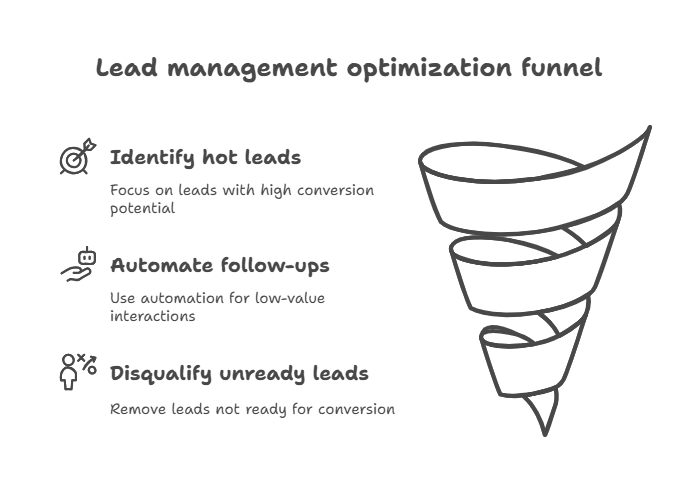
You can:
- Prioritize hot leads
- Automate low-value follow-ups
- Stop wasting time chasing people who aren’t ready
That frees up your team to spend more time where it matters: on deals that actually have a shot.
More personalization, more trust
When you know what someone’s interested in, you can speak directly to their needs.
Instead of guessing, you might say: “I saw you checked out our case study on retail automation. Want me to show you how we helped that client?”
That kind of message builds trust fast. It shows you’re paying attention and adds value without the hard sell.
However, working with signals sometimes does come with a few challenges. Let’s take a look at them.
What are the common mistakes to avoid?
Real-time buying signals in sales can be a game-changer, but only if you use them the right way. Move too fast, trust the wrong data or lean too hard on the tech, and things can backfire.
Let’s look at the common traps to avoid, and how to stay on the right track.
Mistake 1: Overreacting to weak signals
Not every click means intent.
Just because someone opened your email or skimmed a blog post doesn’t mean they’re ready to buy. If you jump in too soon, you risk annoying them or worse = getting ignored completely.
What to do instead:
Wait for patterns, not just single actions. Look for multiple signals over a short time, like a pricing page visit plus a case study download. That’s real interest.
Mistake 2: Not verifying intent before acting
It’s easy to assume a lead is hot when they interact with your content. But if you don’t confirm their interest, you could waste time chasing ghosts.
How to fix it:
Reach out with a light, helpful touch. Ask questions. Start a conversation. Something like: “Hey! Noticed you checked out our ROI calculator. Curious if you’re exploring solutions right now or just browsing?”
Let them tell you where they’re at.
Mistake 3: Using outdated or noisy data
Signals only help if they’re accurate. Old CRM entries, broken tracking or cluttered data can send you in the wrong direction.
What to do:
- Regularly clean your CRM
- Use reliable tools that update data in real time
- Filter out noise: don’t treat every page view the same
Accurate data = better decisions.
Mistake 4: Relying only on tools without a strategy
Even the best software won’t save you if you don’t have a plan. Tools should support your process, not replace it.
How to fix it? Start with strategy:
- What counts as a buying signal for your business?
- Who responds to which signals?
- What messaging should follow each one?
Then choose tools that fit your flow, not the other way around.
And finally, what innovations can you expect? We`re excited, aren’t you?
What trends are shaping buying signals in 2026?
Real-time buying signals are becoming easier to route into daily sales work. In Salesforce’s 2026 State of Sales preview, nine in 10 sales teams say they already use AI agents or expect to within two years. The practical advantage is not more automated guesses; it is faster research, scoring, routing, and follow-up with human oversight.
If you want to stay ahead, it’s not enough to track signals. You need to keep up with how the landscape is shifting. The good news? The tools are evolving fast, and they’re designed to make your job easier.
Here’s what’s changing, and how to take advantage of it.
Smarter signals with AI and predictive scoring
In 2026, AI is doing more than just crunching numbers. It’s helping you predict which leads are likely to convert, before they raise their hand.
Instead of waiting for someone to visit your pricing page, AI tools can now spot subtle patterns in behavior and automatically score leads based on their likelihood to buy.
Many platforms now include predictive scoring out of the box. Use it to prioritize your outreach and personalize your messaging based on where a lead likely is in their journey.
Intent data right inside your CRM
Sales teams used to flip between tools: CRM here, intent platform there. Not anymore.
Intent data increasingly appears inside CRM and sales-workflow tools. The useful 2026 pattern is not “AI decides who buys”; it is a traceable event, a score your team understands, a named owner, and a next action inside the system reps already use.
To use it well, connect signal sources to your CRM, define expiration windows, and log why an account was prioritized. Use a data provider such as Generect to enrich the account and verify the buying contact before the task reaches sales.
What if you could see buyer intent in real time?
Combine your signal source with verified account and contact data before you act.
Privacy-safe data is the new standard
With stricter privacy laws and more awareness around data ethics, how you collect and use signals matters more than ever.
You can’t rely on shady tracking anymore, and you don’t need to.
Modern tools focus on privacy-safe signals: first-party behavior (like site visits or email engagement) and consent-based data from trusted providers.
Review each provider’s privacy documentation, lawful basis, retention controls, opt-out process, and regional coverage with counsel. Build trust by using only the data you need and being transparent about how it supports outreach.
More granular, niche intent data
In 2026, it’s not just about who’s interested; it’s about what exactly they’re interested in.
You’ll see more niche platforms offering deep intent signals based on specific industries, roles or even product categories. This lets you tailor outreach in a much more targeted way.
If you sell to a niche (like fintech, healthcare or HR), look for platforms that specialize in that space. You’ll get sharper insights and more actionable signals than from broad intent data alone.
Let’s wrap things up with a quick summary and a few final tips.
Frequently Asked Questions
A B2B buying signal is an observable action or company event that suggests an account may be evaluating a solution. Examples include a demo request, repeated high-intent website visits, a relevant leadership hire, a funding event or a verified topic-research surge.
Direct requests such as demos, trials, pricing conversations, and security reviews are strongest. A cluster of independent signals is more reliable than one weak event: for example, a pricing-page return visit plus a case-study view and a relevant account change.
Respond immediately to explicit hand raises such as demo requests. For inferred signals, first verify account fit, identity, and contactability; then respond within one business day if the combined score is high.
An email open is a weak signal because privacy features, bots, and security scanners can create false events. Do not escalate on an open alone; look for a reply, click, relevant page visit or another independent signal.
Intent data indicates that an account or person may be researching a topic or showing relevant behavior. Contact data identifies who works at the account and how to reach them. A reliable workflow uses intent to prioritize, then verifies the appropriate buyer and contact details before outreach.
Generect’s documented product role is ICP search, company and lead discovery, email finding, and email validation. Use a website-analytics or intent platform to detect the signal, then use Generect to identify and verify the relevant contact.
Final thoughts
By now, you’ve seen how powerful real-time buying signals in sales can be. They don’t just help you find leads; they help you know when to reach out and what to say.
That’s the difference between chasing cold prospects and connecting with warm, ready-to-buy leads.
Timing + relevance = more wins. Easy to comprehend formula.
Cold outreach is hit or miss. You’re guessing. You’re interrupting.
But when you act on real-time intent signals, you:
- Reach people when they’re already thinking about your solution
- Start conversations that feel natural, not forced
- Build trust faster, because you’re actually being helpful
It’s simple: the right message at the right time always beats a cold pitch.
So, how to get started today?
You do not need a complex system to start. Pick three signals you can observe reliably, define a score and owner, then use Generect only when you need to identify and validate the right contact at a qualified account.
Here’s your next move:
- Define your ideal lead → who are you trying to reach, and what signals matter most to you?
- Use your owned analytics or intent source to capture behavior, then use Generect to find and validate the relevant decision-maker.
- Set up alerts and workflows → prioritize leads as soon as they show intent. No more missed chances.
- Act with speed and relevance → craft messages based on what your leads actually care about, right now.
So don’t wait for leads to come to you. Start watching for the signals they’re already sending.
That’s how you win in 2026.

